
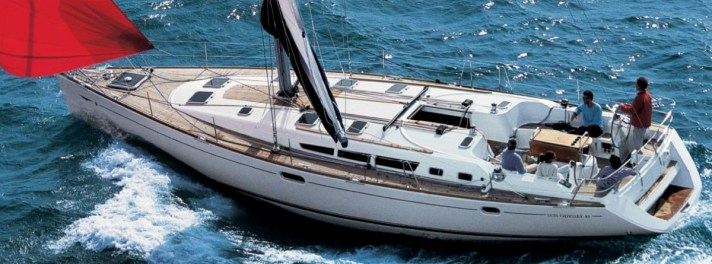
State of the steering in early 2023
We got our new sail boat (Jeanneau Sun Odyssey 49 Performance, now called Mikasa) in February 2022 and we had to motor her from Antibes to Marseilles: no working genoa, and only a few days to do the passage. Before leaving the dock, I had surveyed the steering system : I was almost confident we could motor for 2 days with the steering in its state… but for sure a bit of work had to be planned. Worst case scenario: the autopilot could be used as a back up.
The steering was in the following state (from wheels to rudder):
- wheels : [Lewmar] the leather cover is perished
- wheel-locks: [Lewmar] only one on starboard side, and not functional
- wheel shaft assembly: [Lewmar 89100228] not turning smoothly (bad bearings)
- compass: [Plastimo Olympic 135] one OK w/o night light, one faded (large air bubble) w/ working light
- aluminum pedestals: [probably from Goïot]corroded, partially repainted with epoxy paint
- steering cables: loose and buried under old dry grease
- steering sheaves: [Lewmar 89100228] worn and not turning round
- quadrant: [Lewmar 89100455/QUAD 381 80D B60 K18-5.5 A270] made of aluminum, using stainless steel screws (you see it coming, right?)
- rudder stock: [Jeanneau] OK, made of stainless steel- rudder bushings: [Jeanneau] rubber + Delrin, too much play – need to be replaced
- rudder: [Jeanneau] looks OK, no cracks, no damages. Moisture levels were higher than on the hull, but we managed to have it blasted and stored indoors.
While taking the steering system apart, more flaws were discovered:
- one of the wheel shaft assembly had been hammered (during an attempt to take it apart) – some parts were broken inside (which was the reason the brake was not working)
- the steering cables had a few broken strands
- one of the 4 stainless steel bolts of the quadrant was completely stuck inside the aluminum quadrant (and had to be cut flush)
Steering pedestals
Once the complete linkage (wire, cables and chains) was removed, the pedestals could be uninstalled. The shaft assemblies were removed using a impact screw driver, the compasses unscrewed. 6 x M10 bolt and nuts were holding the pedestals from under the deck.
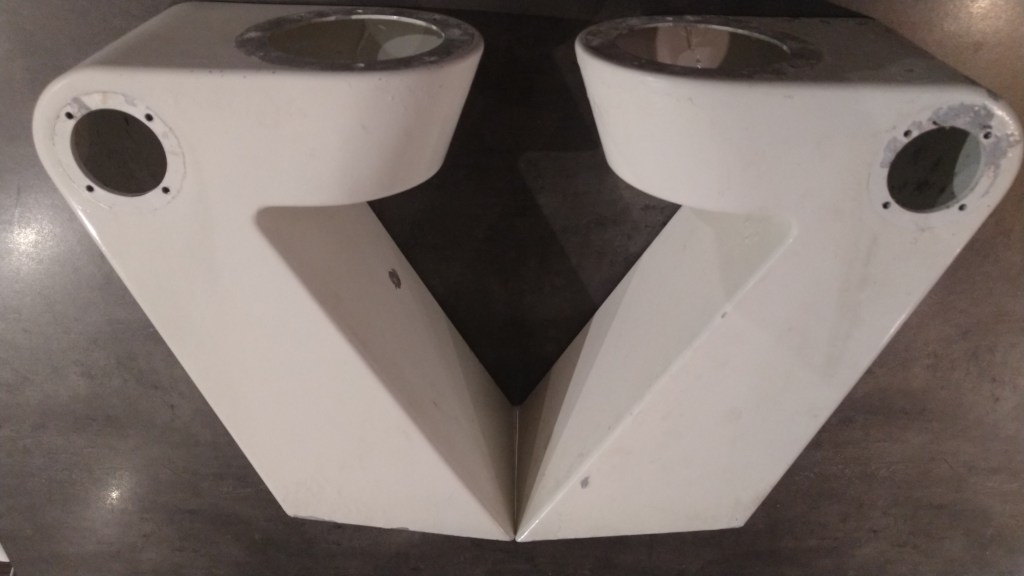
I could not identify clearly which company produced those pedestals (most probably Goïot Systems, specifically for Jeanneau… but Goïot told me they could not build new ones anyway). Refurbishing them was the only option. So… the 2 pedestals have been de-greased (with soap and water) and were sent to a local (super competent) paint shop, DM-Peinture (in Haute-Savoie), for a complete treatment:
– acidic bath to remove remaining paint
– corundum blasted to prepare the aluminum surface
– epoxy primer thermo-coat – inside and outside
– final thermo-coat in RAL9003 (signal white) – inside and outside
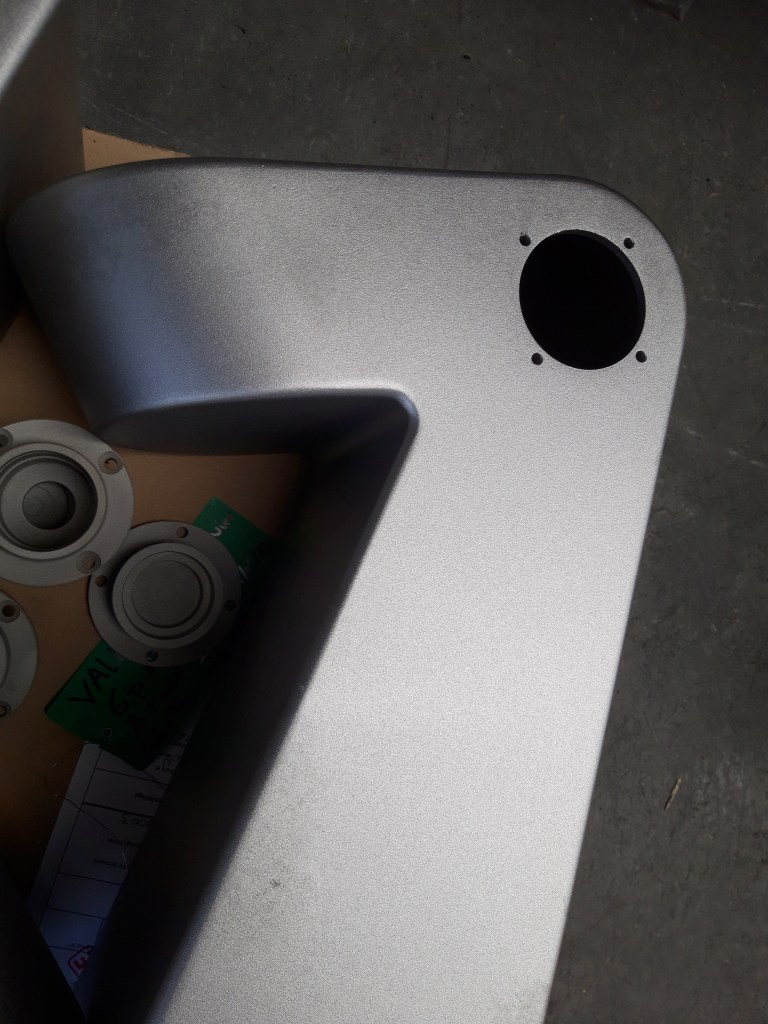
The paint shop at that stage confirmed that those parts were nice pieces of aluminum work, totally worth investing time and money in protecting them for some more decades.
They now look fantastic, certainly better than when new! All the stainless steel hex screws were also replaced by A4 torx screws, using (lots of) Tikal’s Tef Gel.
Quick tips:
- Stainless steel and aluminium, in a marine environment, will react together (electrolysis). We use Tef Gel to make an durable isolation layer between the two.
- When hex screw are stuck in aluminum, their head will be rounded quite easily. One solution (before drilling the head), is to force in / hammer in a Torx bit in the rounded hex head. The Torx bits grips into the rounded head.
- For maximum safety, we replace all screw with Torx screw as soon as possible. The corrosion issues are the same, but Torx heads can withstand much more torque.
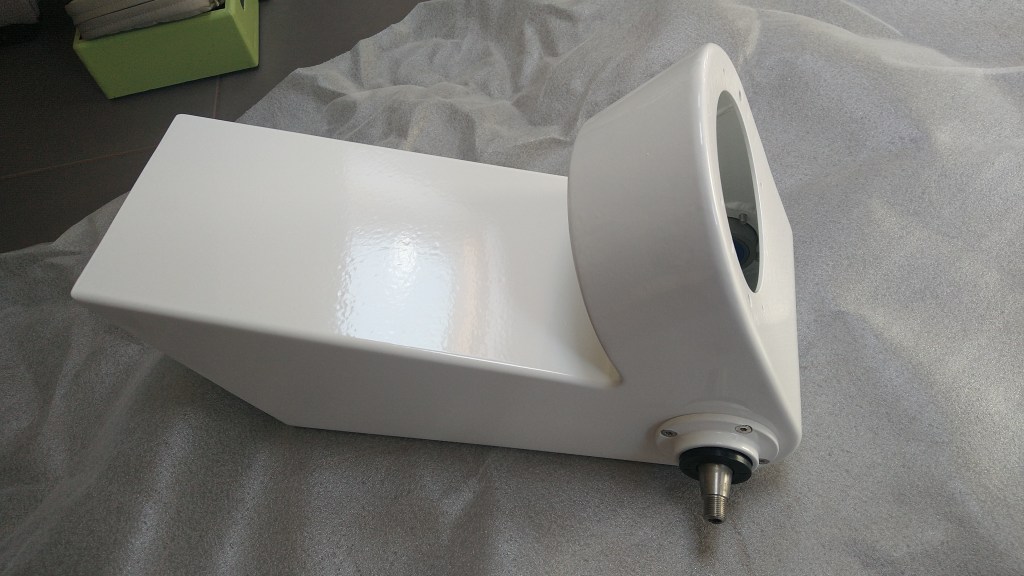
Wheel shaft assemblies
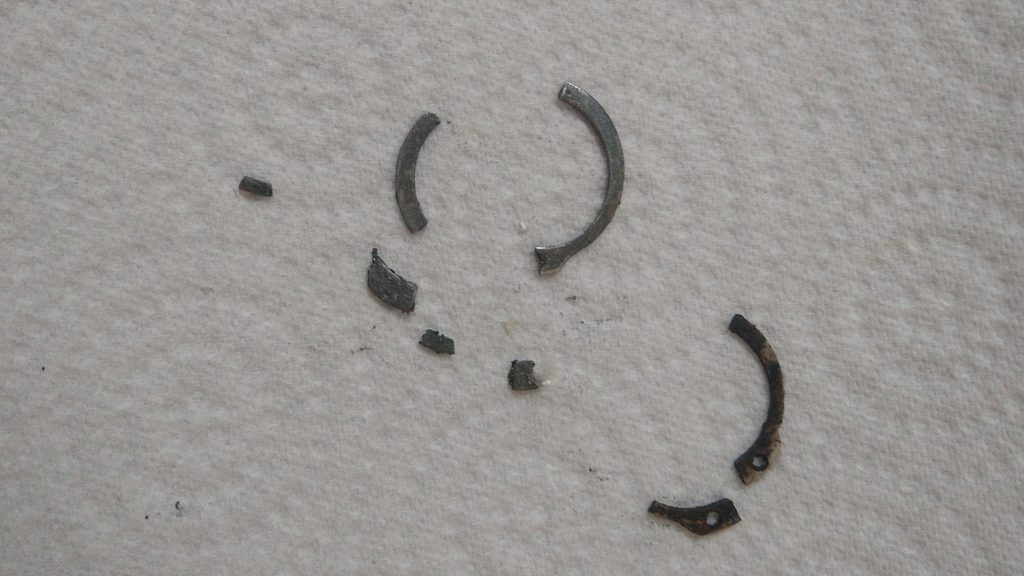
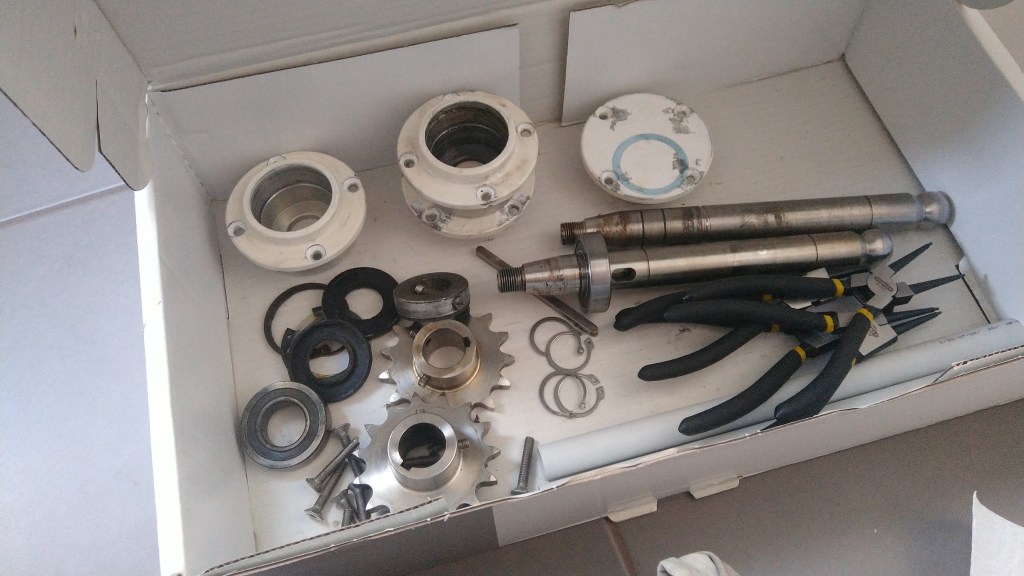
The two wheel shaft assemblies were in a bad state. The 4 aluminum external part were sent along with the pedestal for blasting and got new paint. The rest of the assemblies is made of ball-bearings, mild steel circlips and stainless steel parts. I was able to save/reuse all stainless steel parts. Circlips (25mm/1″ outter circlips and 50mm/2″ inner circlips) and ball bearings (SS R162RS) were upgraded to new stainless steel waterproof versions. New shaft seals (1″ inside Ø, 2″ outside Ø, ½” thickness) were added. I was also VERY lucky to find a complete shaft assembly of exactly the same dimensions (a new old stock from 2013) on ebay. With all those new parts, I was then able to build two complete wheel shaft assemblies, both with a wheel brake, and have some spare parts for the future.
Compasses
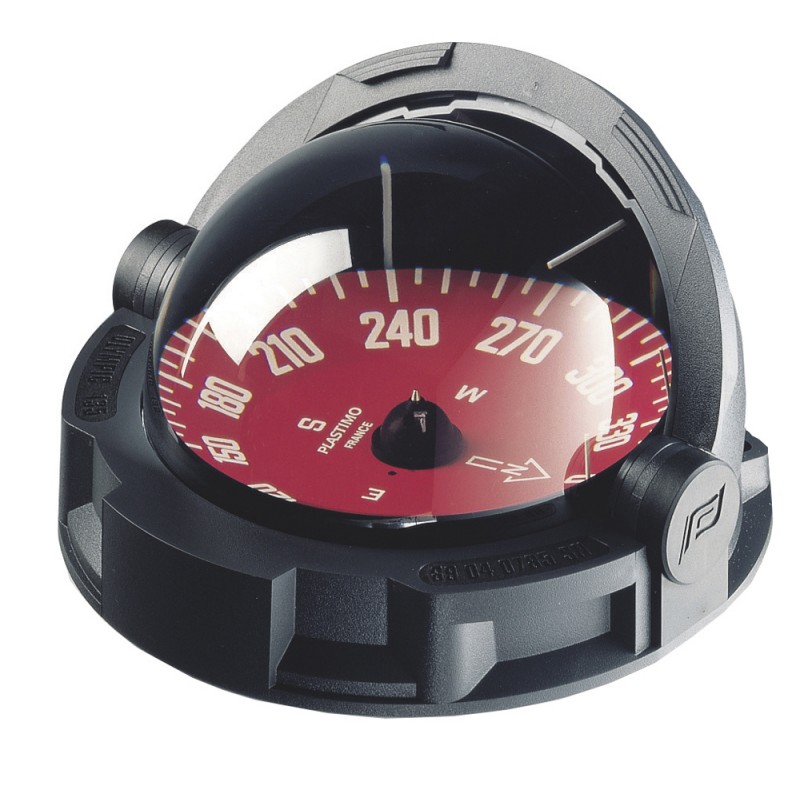
I was able to find a good deal on 2 Olympic 135 compasses from Plastimo. They will replace the old compasses that we sold for parts.
Steering sheaves
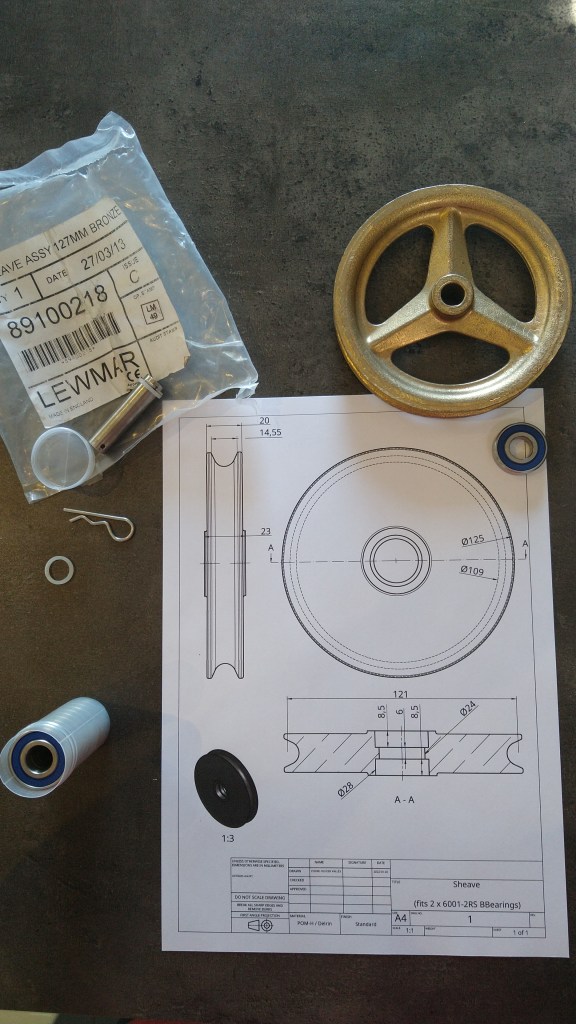
The 4 steering sheaves were in a bad state:
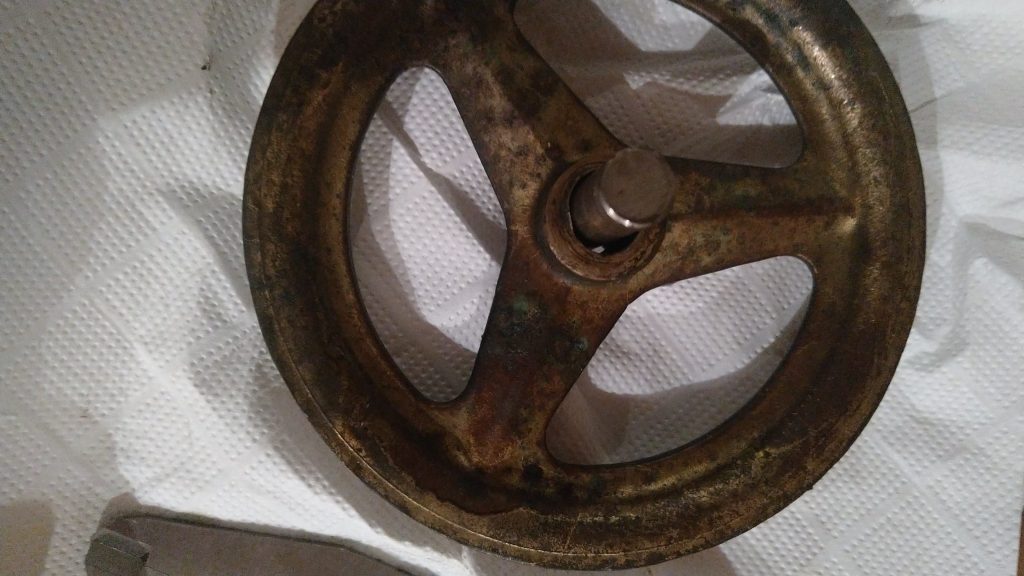
The 4 short stainless steel shafts (Ø 12 mm) could be saved (no wearing at all), but the bronze sheaves had to be replaced. I designed a new sheave CAD model, including a pair of ball bearings (SS 6001-2RS) per sheave. Those sheaves will be made of Delrin.
Rudder stock bushings
Once the quadrant was out, dropping the rudder was an easy (but heavy) job. Then, getting the bushings out was a 2-day job. The Delrin inner bushings had to be split into two parts (using a drill). The rubber bushings had to be drilled, cut, burnt, torn, knocked and hammered out. I have probably tried all the tools I had available – it was a real pain, especially when working from the aft lockers.
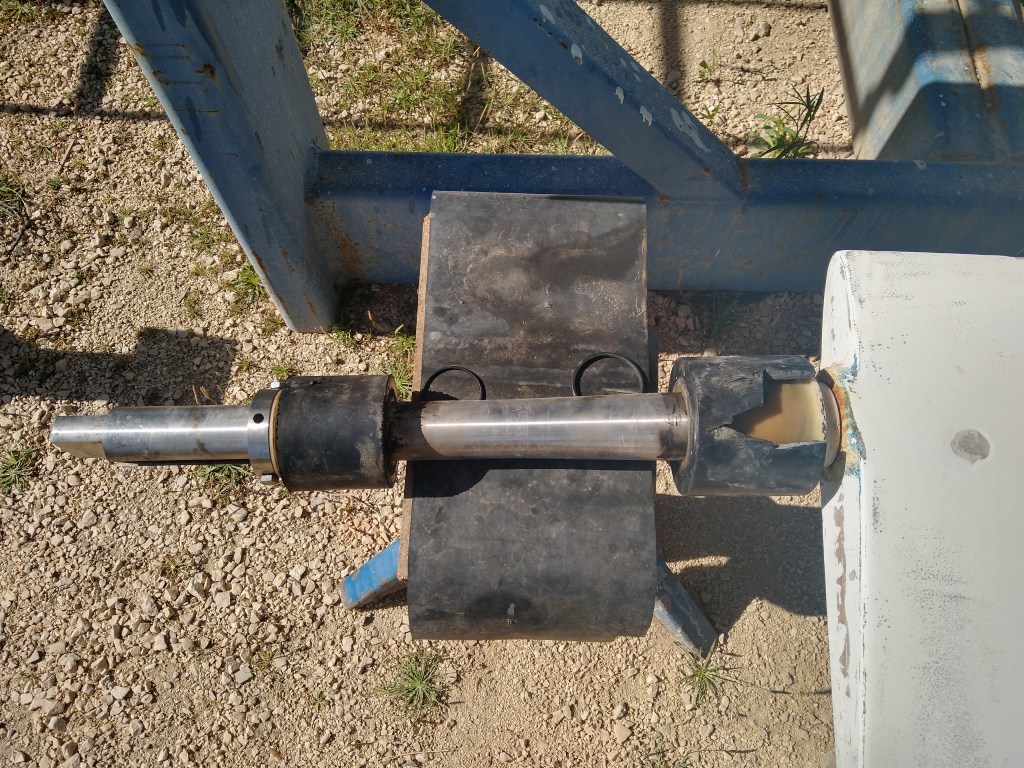
Delrin bushings (dirty white) inside rubber bushings (black)
With everything out, I could finally measure precisely the rudder stock and the tube. Of course, I had contacted Jeanneau’s technical support to get technical information. All I got from them was a very heavily precise, complete, very easy to read and clean doodle 🤡.
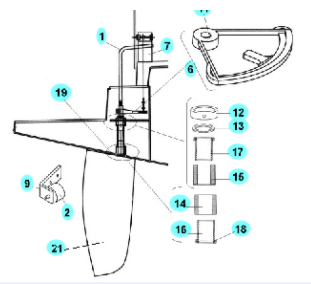
. 15 – réf. n° 956939 BAGUE ELASTOM.D115/75X100
. 16 – réf. n° 982600 PALIER MECHE D70 SO48/JOINT
. 17 – réf. n° 956979 SO451-PALIER MECHE D.60
By getting the steering system apart, I could confirm that the provided information were wrong: the rudder tube’s inner diameter is ø115mm at the top and ø140mm at the bottom (not 115mm). The rudder stock’s outer diameter is ø60mm at the top and ø69mm (not 70mm) at the bottom.
Side note: it’s funny to notice that in many places of the documentation, Jeanneau still refers to ‘SO48’ (Sun Odyssey 48) – which was the initially planned model number for the Sun Odyssey 49. Even the HIN plate riveted inside the boat has “SO48” on it.
The plan is to replace the bushings with proper rudder bearings made by Jefa in Danemark. Jefa Rudder Systems builds rudders, bearings and steering components. They have also been really helpful in providing information and even machining some of their standard bearings to fit our boat’s rudder tube perfectly.
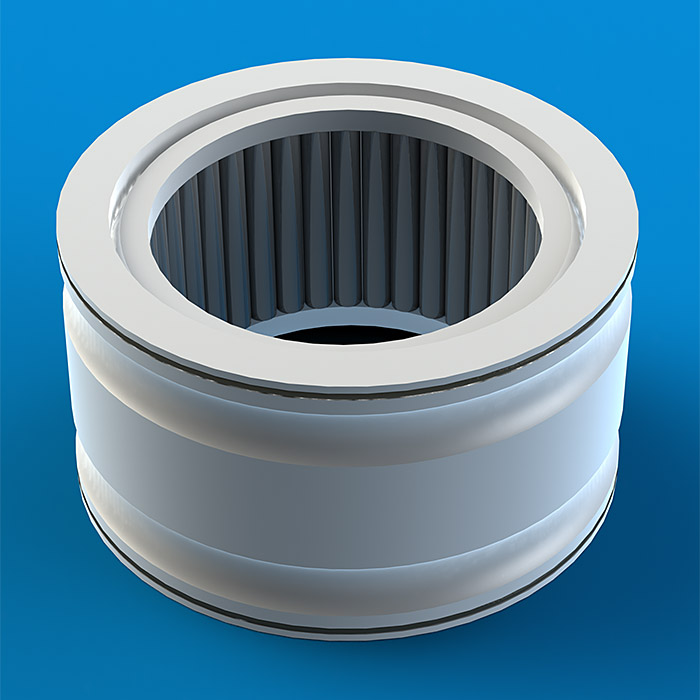
from Jefa website.
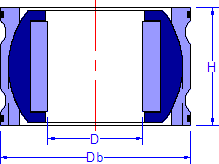
from Jefa website.
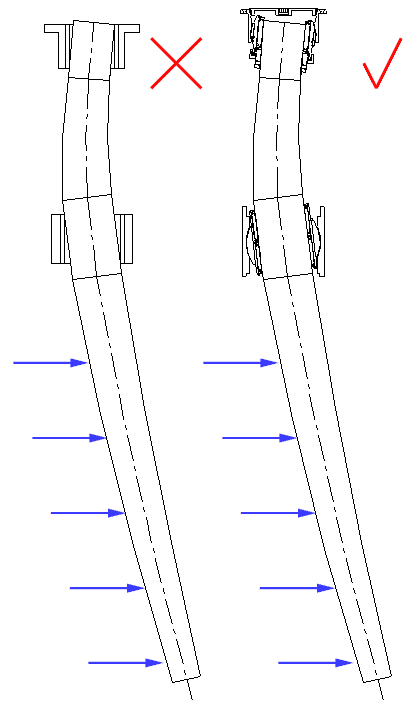
from Jefa website.
Replacing the wire cables and chains
The main goal here is to obtain the smoothest, lightest and most responsive steering. That’s why the wheel shafts have been controlled and received new ball bearings, the new 4 Delrin sheaves are mounted on ball bearings too, and the stock’s bushings are being replaced by roller bearings. I am also going to replace the broken ø6mm wire cables with dyneema ropes, covered with dyneema. I obviously took the extra width into account while designing the sheaves and the quadrant.
Designing a new quadrant
I did not like the Lewmar aluminium quadrant – probably because I fought for a complete day inside a tiny locker, and bought a specific wrench for it… and eventually ended up cutting the last bolt. Anyway, I hate this aluminum / stainless steel hardware combination.
Having a new one from Lewmar was 1500 € (+ VAT) and Lewmar was unable to provide any lead time. So, I decided to work on it by myself. I took the dimensions on the old quadrant, and I design a new one. After 7 iterations, here is the final design:
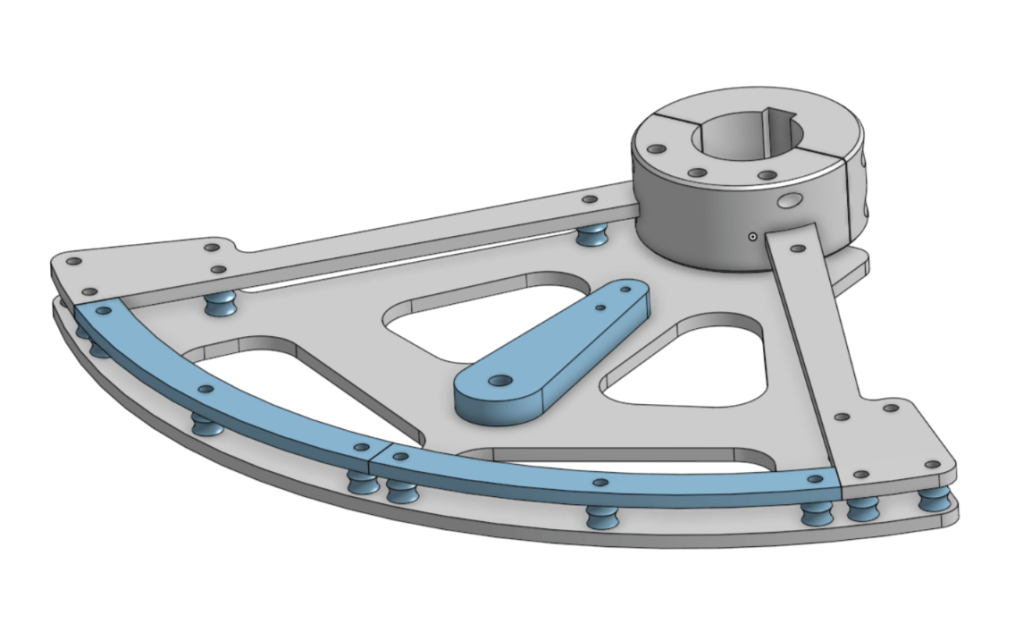
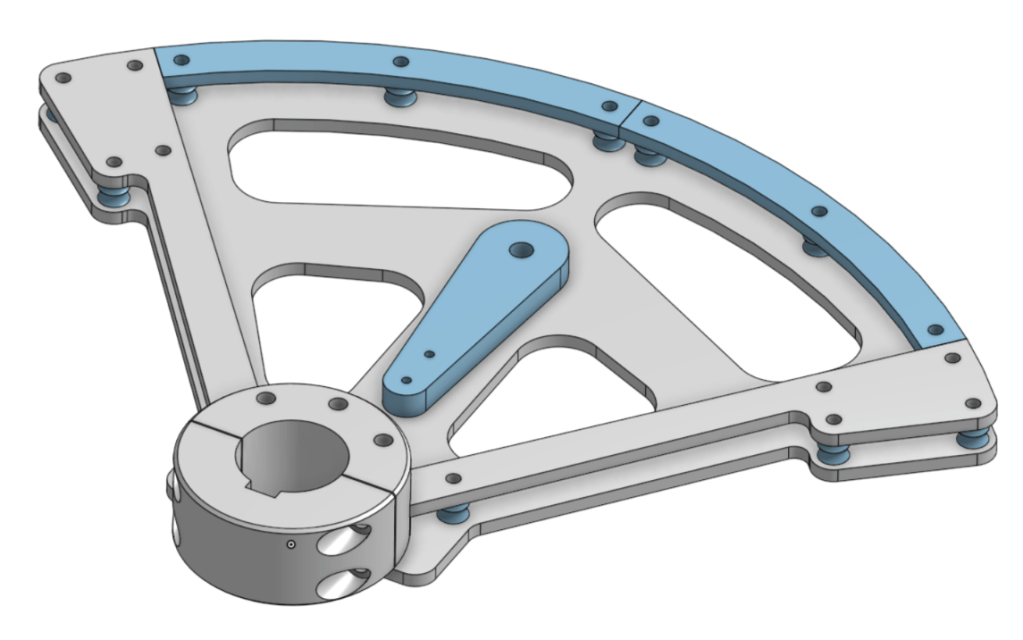
The assembly consists of parts that were designed to be robust (A4 stainless steel) and easy to machine. The blue parts are made of Delrin – when strength is not required, like for the spacer for the central rudder feedback sensor spacer or the guides for the ropes/cables – in order to save some weight. Everything is held in place with A4 stainless steel M8 and M10 bolts and nuts. I had plans to weld the base plate to he rudder stock collar front part – but there was no need at all, this quadrant is already super strong.
Do not hesitate to contact us for the STL files if you are in the process of renovating the steering on your Jeanneau Sun Odyssey from that era. Many parts of the steering are similar on thoses models.
We can provide STL files for the quadrant and sheaves.
One final touch
We ordered new leather covers for the wheels from skinclo, and that made quite a difference!
The results
Before the first sail, I went back into the locker to tighten up all the steering rope/cables. The steering is amazing : smooth, light and precise. This was the goal and we are super happy with the results!


